Carla Amorós-Negre is a tenured professor of General Linguistics at the University of Salamanca and focuses primarily on research in sociolinguistics, language policy and planning and linguistic anthropology She is a member of the LINGUAPAX Advisory Board and the Editorial Committee for the series Lengua y Sociedad en el Mundo Hispánicopublished by the Ibero-American publisher Vervuert, and she has coordinated the DIVERSILING service-learning project at the University of Salamanca (https://diversiling.usal.es/).
The bilingual Masewaltatol-Tutunakú (“Nahuatl”-“Totonac”) story Takwatsin / Xtaan, known in Mexican Spanish as el tlacuache (“the big eater”), was recently published. Takwatsin is a Nahuatl word (tlakwa “to eat” + “-tsin” “honorable, beloved”). What makes this publication unique is not only that it appears in an Indigenous language, but also that it brings together two Indigenous languages that coexist in the Sierra Norte of Puebla.
The Nahuas are one of the best-known indigenous groups in Latin America; they currently speak a number of varieties of the language of the ancient Mexicas (“Aztecs”), which belongs to the Yutonahua language family. Nahuatl is, as is the case with many other languages, a macrolanguage, grouped together by the strong ethnic, social, and historical ties among the communities. According to data from the National Institute of Indigenous Languages (INALI), Nahuatl comprises some 30 variants and is the most widely spoken language in Mexico among the 68 documented national languages, all of which have been recognized since the 2003 General Law on the Linguistic Rights of Indigenous Peoples as co-official languages alongside Spanish.
Globally, Nahuatl has 1.5 million speakers or more, making it a vital language in Mexico. In many regions, it is still passed down from one generation to the next and is used in various aspects of daily life, as well as in ceremonial practices, music, literature, and oral tradition. However, as is the case with most minority languages around the world, it is vulnerable to varying degrees, depending on the differing levels of threat faced by its variants in the at least 16 Mexican states where it is spoken: Morelos, Puebla, Veracruz, Hidalgo, Guerrero, San Luis Potosí, Nayarit, Durango, the State of Mexico, Tlaxcala, Oaxaca, Michoacán, Mexico City, Colima, Jalisco, and Tabasco (Embriz and Zamora, coord., 2012), not counting its migrant communities that extend as far as the United States and even Canada. Given the macrolanguage nature of Nahuatl—whose varieties differ phonologically, lexically, and morphosyntactically—a more phonemic orthography was developed beginning in the second half of the 20th century, in contrast to the traditional colonial writing system of Classical Nahuatl. The aim is, therefore, to facilitate literacy, the production of educational materials, and written communication—but in a flexible manner that adapts to the different varieties—so that writing is viewed as a tool for revitalization.
Although initiatives aimed at preserving and strengthening Nahuatl have been promoted in recent decades—including its gradual incorporation into the education system—given that, among other legal instruments, Article 11 of the 2003 General Law on Linguistic Rights (LGDL) grants indigenous peoples the right to bilingual education, there are still many obstacles preventing Nahuatl speakers from becoming literate and receiving an education in their mother tongue. In fact, instruction in this language continues to be conducted in Spanish, as is the case with most indigenous languages in Ibero-America, primarily in the Schools of Intercultural Bilingual Education (EIB), which for the most part follow a model of transitional bilingualism toward the hegemonic language. The lack of teaching resources, the shortage of bilingual teachers with specialized training, and the persistence of discriminatory attitudes toward indigenous languages make it difficult for speakers to successfully acquire both Spanish and Nahuatl (see Flores Farfán 2009; Schmelkes 2013).
This work is innovative because it is a bilingual story told in two indigenous languages, as revealed by the story’s other title, Xtaan—a word in Tutunakú, which belongs to a different language family, for the opossum—the only Mexican marsupial that frequently appears in the legends of various Mesoamerican communities as a cunning and resourceful character who stole fire to give it to human beings. Tutunakú is a macrolanguage of the Totonaco-Tepehua family, comprising some 7 variants with a high degree of mutual intelligibility and a total number of speakers much smaller than that of Nahuatl—around 250,000—who are found primarily in the states of Veracruz, Puebla and Hidalgo. When writing in Tutunakú—as we noted regarding Nahuatl—speakers typically use the local variant as the basis for teaching and writing. In the case at hand, Masewaltatol and Tutunakú coexist in communities in the Sierra Norte of Puebla.

In any study of linguistic marginalization, it is necessary to consider many factors in order to assess the risk of language extinction. In fact, in addition to the total number of speakers of the language, INALI very wisely takes into account vitality—which is closely related to intergenerational transmission within the community—and considers it positive when children aged 5 to 14 in the community who speak the indigenous language account for more than 25% of the speakers. Likewise, when determining the risk of extinction, dispersion—that is, the number of localities where the language in question is spoken—is considered very important.
In the case of the story we are presenting, Takwatsin / Xtaan, we have worked, respectively, with variants of the central-northwestern “Nahuatl” or Masewaltatol, which has around 70,000 speakers (https://atlas.inpi.gob.mx/nahuas-de-puebla-lengua/) and is distinguished by having -t instead of –tl, as well as with the southern central Tutunaku, which has around 115,000 speakers (https://docs.google.com/file/d/0B55jT47AR8VsdlNwdDUzMHdKeU0/edit?resourcekey=0-rkCZm1ensomD2drvotyOQg).

Translation of the excerpt by J.A. Flores Farfán: An old woman who was fishing in the river with an ayate (“net”) saw them and, as she gathered them up, murmured, “Now I have my children.” The children grew up to be very mischievous, and one fine day they asked the old woman about their parents.
According to the criteria of INALI’s Advisory Committee for the Protection of Indigenous Languages at Risk of Disappearance, in both cases these languages are considered to be at “no immediate risk of disappearance” (Level 4), based on the percentage of children under 14 who speak the language as a first language, combined with the number of localities where the language is used daily and the percentage—greater than 30%—of speakers in the respective municipalities.
The publication of this book on the legend of the opossum is part of the CIESAS-Mexico collection of indigenous languages, directed by José Antonio Flores Farfán, an anthropologist and linguist who serves as coordinator of the Digital Archive of Indigenous Languages at CIESAS’s Víctor Franco Laboratory and is a specialist in Mexican indigenous communities. Flores Farfán is the representative of the NGO Linguapax in Latin America, and together with Josep Cru—a professor at the University of Newcastle and secretary of the NGO—they collaborated with teachers and students to translate the story at the Tosepan Kalnemachtiloyan School in Cuetzalan (Puebla, Mexico). This school belongs to the Tosepan Union of Cooperatives and is committed to truly immersive education in the Nahuatl language, grounded in the community’s own epistemology, worldview, and culture. The translation from Tlacuache into Tutunaku was also carried out by poet and teacher Cruz Alejandra Lucas Juárez. The book also includes a brief explanation and introduction to the story in both English and Spanish.
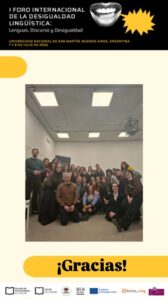
As can be seen in this photograph, last February 2026 marked the first time that many children saw material of this kind presented in their native language, Masewaltatol, as part of a truly emancipatory and decolonial educational experience that incorporated writing practices developed by the speakers themselves, together with teachers, anthropologists, and linguists. These vernacular literacies (see Grenoble and Whaley 2006; Blommaert 2008)—which are voluntary and community-based, and not necessarily linked to government intervention—are fundamental to the empowerment of speakers as key agents in the management of their languages. This revitalization initiative is, therefore, a good example of an ecolinguistic approach that offers an alternative to the Western-European linguistic model—a horizontal proposal aimed at contributing to the legitimization of the speakers of these languages and to their literacy (cf. https://linguapax.org/visita-a-lescola-indigena-tosepan-kalnemachtiloyan-immersio-en-nahuat-i-llibre-bilingue-amb-realitat-augmentada/). Furthermore, as part of the collaborative creation of the material—moving beyond the logocentric model confined exclusively to writing—the book features augmented reality, an app created using the voices of the children and teachers themselves, which will be available soon.

This publication was made possible thanks to the collaboration between Linguapax, the University of Newcastle, the University of Salamanca, the University of Helsinki, and the University of Bremen. Last year, these last three institutions, led by professors Carla Amorós, Eeva Sippola, and Carolin Patzelt, launched a Blended Intensive Program (BIP) as part of an Erasmus+ program that has fostered greater institutionalization and inter-university cooperation to promote, raise awareness of, and advance knowledge of indigenous languages in Ibero-America and the Philippines.
This BIP was a continuation of the continuing education courses—offered in both in-person and virtual formats—that Dr. Amorós initiated at the University of Salamanca in 2019 to mark the declaration of the International Year of Indigenous Languages, which was followed by the proclamation of the International Decade of Indigenous Languages (2022–2032, https://es.unesco.org/idil2022-2032). This initiative, in collaboration with the Institute of Ibero-America, the Center for Brazilian Studies, and the NGO Linguapax, addresses the need to work toward greater sustainability and linguistic and social equity for speakers of these minority languages, who still face significant stigmatization and discrimination.
Given the importance of the University of Salamanca in the study of Amerindian languages in the past—thanks to the efforts of Rector Tovar—and the ties between the University of Salamanca and Ibero-American institutions, indigenous languages and language contact in Ibero-America should form a fundamental area of work, teaching, and research. So far, it has been a true pleasure to have been able to offer, since 2019, introductory courses and lessons on the Nahuatl languages of Morelos (Mexico); Ziona (Ecuador); Yucatec Maya (Yucatan Peninsula, Mexico); Paraguayan Guaraní (Paraguay); Mapudungun (Chile); and Chabacano (Philippines). Likewise, the courses have included training in linguistic typology; the diversity of multilingual ecologies in the Americas; research on language contact; linguistic and ethnographic atlases; language policy and planning in Ibero-America; documentation, revitalization, and indigenous agency, etc., led by leading experts such as Professors Moreno Cabrera, Pere Comellas, Enrique Bernárdez, Haralambos Symeonidis, Anna María Escobar, Azucena Palacios, Karolina Grzech, Jaqueline Caniguan, Martine Bruil, and Marleen Haboud, among others. The training programs also included visits and screenings of films and documentaries in indigenous languages, which we hope will continue to be fostered, thereby strengthening these great linguistic and cultural legacies of the world.
Thus, joint projects such as these and emancipatory pedagogical practices like the one described at the Tosepan Kalnemachtiloyan school lead us to a profound reflection on the possibility of conceiving bottom-up literacy practices as tools for linguistic sovereignty, epistemic justice, and community empowerment. This is a conception of writing that differs greatly from its association with codification and standardization in Western cultures of standard languages (Milroy 2001; Amorós Negre 2023). Among the arguments commonly put forward to promote the writing system development (and, frequently, subsequent standardization) of predominantly oral indigenous languages are the contribution to the preservation of these languages and the strengthening of their status and communicative functions. As documented in Jones and Mooney (eds. 2013), “a standardized writing system is often considered necessary for the promotion of the language and for the development of formal educational materials.” Furthermore, in many cases, writing can help foster a sense of shared identity among speakers of different varieties of the same language.
However, the development of a writing system also poses significant challenges, making it essential to consider numerous variables through ethnographic and fieldwork studies: whether the community is already literate in a dominant language or remains pre-literate; whether it is possible to develop endographic writing systems such as the one discussed; and, above all, whether the community itself perceives the need to take the first steps toward developing a writing system for its own language. Linguists and anthropologists must carefully assess whether this process will have real-world applications in the community’s life and whether it will yield more benefits than potential intergroup conflicts (Lüpke 2011; Jaffe et al. 2012).
Experiences such as the one carried out at the Tosepan Kalnemachtiloyan School highlight the value of local or community-based literacy and the development of an endographic writing system—understood as a process that emerges from within the community itself and involves the active participation of its members in all phases of its development. These collaborative action-research methodologies, in which the community takes a leading role in defining, implementing, and legitimizing its own literacy practices, pave the way for promoting decolonial language management that places the knowledge, decisions, and agency of Indigenous language speakers at the center of language revitalization.
REFERENCES
Amorós-Negre, Carla (2023). “Al monolingüismo, ponle freno: la ideología de la lengua estándar y la ‘lengua’ del estado-nación.” Recuperado de: https://espanolcontacto.unirioja.es/index.php/2023/05/29/al-monolinguismo-ponle-freno-la-ideologia-de-la-lengua-estandar-y-la-lengua-del-estado-nacion-nueva-entrada-de-blog-de-carla-amoros-negre/
Embriz Osorio, Arnulfo y Óscar Zamora Alarcón (Coords.) (2012) México. Lenguas indígenas nacionales en riesgo de desaparición: Variantes lingüísticas por grado de riesgo. 2000 / INALI; coordinadores. México: INALI. http://www.inali.gob.mx/es/publicaciones-2012.html
Flores Farfán, José Antonio. (2009). Variación, ideologías y purismo lingüístico. México, D.F.: CEISAS.
Grenoble, Lenore y Lindsay Whaley. (2006). Saving Languages. An Introduction to Language Revitalization. Cambridge: Cambridge University Press.
Jaffe, Alexandra, Androutsopoulos, Jannis, Sebba, Mark y Sallly Johnson (ed.) (2012). Orthography as social action: Scripts, spelling, identity and power. Berlin: Walter de Gruyter.
Lüpke, Friederike. (2011). “Orthography development”. En P. Austin & J. Sallabank (eds.), The Cambridge Handbook of Endangered Languages (pp. 312-336). Cambridge: Cambridge University Press.
Jones, Mari C. y Damien Mooney (eds.) (2013). Creating Ortographies for Endangered Languages. Cambridge: Cambridge University Press.
Schmelkes, Sylvia. (2013). “Educación para un México intercultural”. Sinéctica (40), 01-12.